Our Buildings Deserve More Than a Clipboard
The United State’s educational facilities are aging faster than teams can document them. It’s time to stop losing skilled labor to paperwork and start reclaiming it for the work that actually matters.
The Numbers Behind the Crisis
On any given school day, 56 million people walk into public school buildings across the United States — 17% of our entire population. Those buildings represent 8.3 billion square feet of infrastructure and account for 24% of all U.S. infrastructure spending, second only to highways.
Yet the federal government funds 31% of highway infrastructure and only 3% of school infrastructure. The rest falls to you.
BILLION Annual funding gap for U.S. educational facilities
%
The share of facility funding carried by local communities
Schools built before 1980, contain hazardous materials
PER STUDENT Maintenance & Operations cost
THE LABOR CRISIS
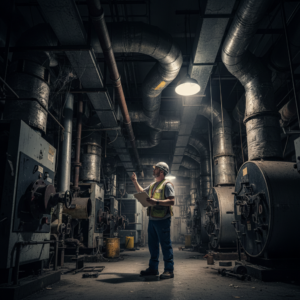
Your Team Is Shrinking. Your Buildings Are Not.
In 1998, 53% of maintenance and operations budgets went to in-house salaries. By 2023, that number dropped to 45%. Districts are managing buildings that are older, more complex, and more regulated than ever — with fewer people and fewer dollars.
When internal roles go unfilled, districts pay the premium. One district reported paying $112/hr to HVAC contractors because they couldn’t fill the same role internally at $16/hr. That’s a 7x cost multiplier — and it’s happening everywhere.
The remaining technicians aren’t maintaining buildings. They’re buried in paperwork. We call it the Transcription Trap — and it’s costing your district $19,800 per technician, per year, in lost productivity.
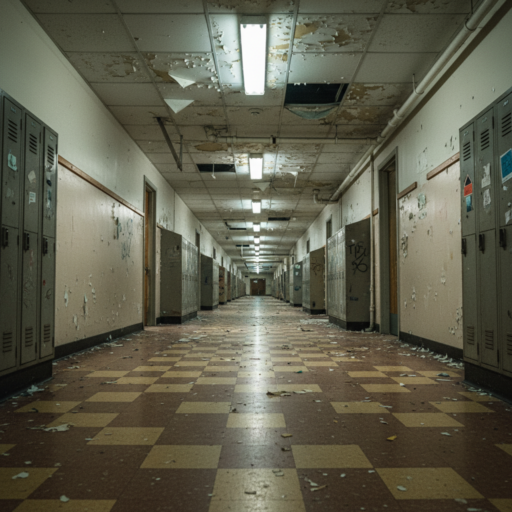
THE SUMMER SQUEEZE
12 Weeks. 12 Months of Maintenance. Zero Room for Guesswork.
Whether it’s a 1,200-room university housing turn or a district-wide HVAC overhaul, the summer window is the only time major work gets done. Every hour your team spends on manual documentation during this critical period is an hour stolen from preventative maintenance, punch lists, and the repairs that prevent next year’s emergency work orders.
Project Aidra eliminates the documentation bottleneck. Your team walks the building. Our AI handles the rest — condition scoring, defect identification, cost estimation, and reporting — in minutes, not weeks.
The result: your summer workforce shifts from transcription to prevention. From catching up to getting ahead.
THE SOLUTION
Replace the Clipboard. Keep the Expertise.
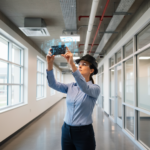
Project Aidra is AI-powered condition intelligence built specifically for facilities professionals. Using any camera-enabled device — a smartphone, drone, GoPro, or 360° camera — your team captures visual data during routine walkthroughs. Our computer vision does the rest.
What You Get:
- 85% Reduction in inspection and documentation time
- Automated Condition Scoring aligned with industry standards
- Built-In Cost Estimation for every identified deficiency
- Exportable Reports ready for board presentations, capital requests, and compliance audits
- Complete Data Sovereignty — your data stays yours, exportable via CSV, PDF, or API
No specialized hardware. No new workflows to learn. Just your existing team, working faster and smarter.
The Research Behind the Solution
Our latest white paper, “The Inversion of Stewardship,” provides a rigorous, data-driven analysis of the $85 billion facilities crisis and a technical framework for closing the gap through AI-augmented condition intelligence. Grounded in the State of Our Schools 2025 report and validated by decades of field experience.
Inside the paper:
- The CRV framework and why current spending levels are mathematically unsustainable
- The Poverty-Maintenance Paradox and its impact on equity
- The 24:1 Stewardship Model with full ROI methodology
- A technology roadmap aligned with the five national Pathways to 2050
See It With Your Own Buildings
Every portfolio is different. Every campus has its own story. The fastest way to understand what Project Aidra can do for your team is to see it work on your actual use case — your buildings, your workflows, your summer timeline.